DWI Defense by a Former DWI Investigator and Police Instructor
- Home
- /
- List Item #2
DWI DEFENSE
For over a decade, I trained law enforcement officers on the exact DWI investigation techniques now being used against you. I know where these cases break -and how to break them.
Why a Former DWI Instructor Defends These Cases Differently
I learned DWI Investigations from the inside.
Before I represented people charged with DWI, I was a law enforcement officer. For more than ten years, I conducted DWI investigations on the road and trained other officers in the National Highway Traffic Safety Administration (NHTSA) standards used in every Virginia DWI arrest -the standardized field sobriety tests, the breath testing protocols, the report-writing requirements, and the courtroom testimony procedures.
That means when I review your case, I’m not guessing where the officer may have cut corners. I know:
- Exactly what an officer is required to observe before initiating a stop
- How the Walk-and-Turn, One-Leg Stand, and HGN tests are supposed to be administered — and the specific deviations that make them unreliable evidence
- The maintenance, calibration, and observation-period rules for the Intoxilyzer breath instruments used in Fairfax and across Northern Virginia
- The wording an officer must use when reading Virginia’s implied consent advisement
- How a properly written DWI report should look -and what it tells me when it doesn’t look that way
A DWI case is built on a thousand small details. My background lets me find the ones the prosecution hopes you’ll miss.
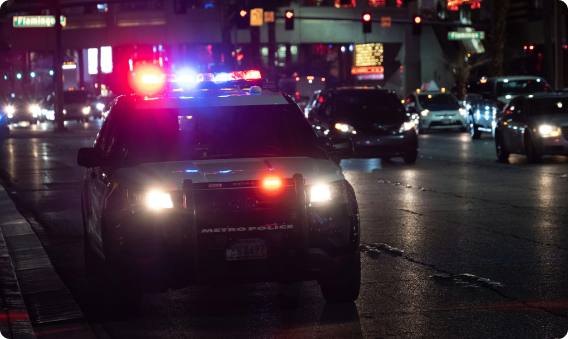
The first stage is vehicle in motion.
During this stage, the officer observes the vehicle in motion and evaluates driving behavior for any violations of law or indicators of impairment. Here, we evaluate whether the Officer had grounds to make a traffic stop or initiate a DWI investigation.
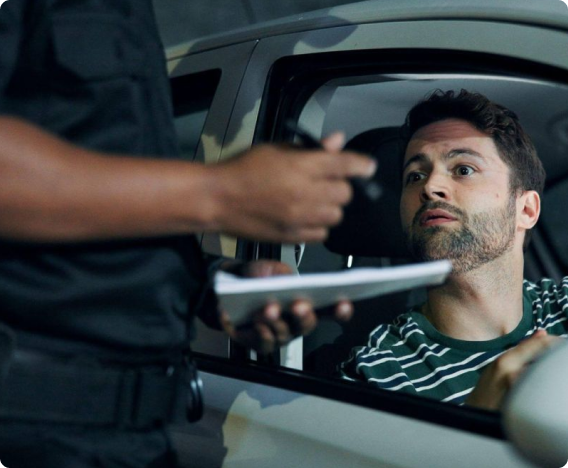
The second stage is personal contact
This is the point where the officer first contacts the driver. This is the first opportunity the officer has to directly observe and interview the driver. Based upon this evaluation the officer determines whether to continue their investigation.
Pre-arrest screening
This stage of the investigation is commonly known as field sobriety testing. These are psychophysical tests that require the driver to perform divided attention tests. These tests are designed to require the driver to do two things at once. The tests are physical, mental, and psychological in nature.
In Virginia, under many circumstances, an officer will ask to administer a portable breath test (PBT). While the PBT results are generally not admissible in court, they do give the officer additional facts to make an arrest.
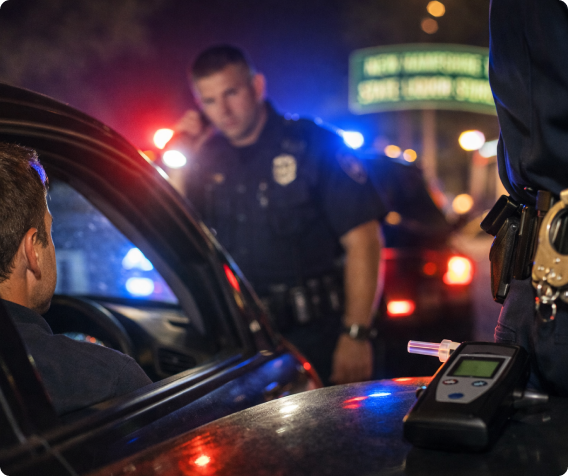
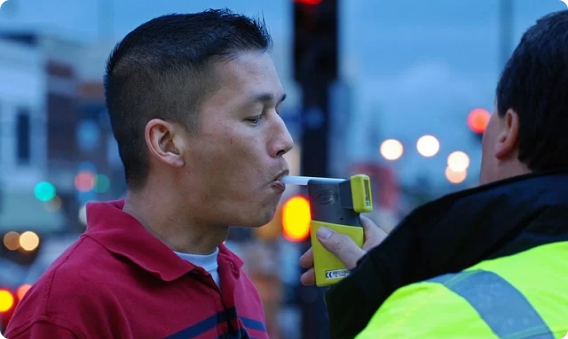
Breath test
After being arrested for DWI the driver is taken to a police facility where they are read a section of motor vehicle code that requires them to perform a breath test. At this point, a breath test is administered by an officer. The results from a breath test are admissible in court.
Each of these stages is filled with legal and evidentiary pitfalls the officer must get right. Mistakes in any of these stages of the investigation contribute to a defense against the charges.
DUI & DWI Charges in Virginia
Virginia has some of the strictest DWI laws in the country. The specific penalties you face depend on your BAC, your prior record, and any aggravating factors. Below is a high-level summary — every case is different, and the only way to understand your real exposure is to talk through the facts with an attorney.
First Offense DWI (Class 1 Misdemeanor) Up to 12 months in jail, up to $2,500 in fines, 12-month license suspension, mandatory ignition interlock if a restricted license is granted, mandatory enrollment in the Virginia Alcohol Safety Action Program (VASAP). Mandatory minimum jail time begins at BAC .15 (5 days) and BAC .20+ (10 days).
Second Offense DWI (Class 1 Misdemeanor) Penalties depend on whether the prior offense was within 5 years or 5–10 years. Mandatory minimum jail time, 3-year license revocation, mandatory ignition interlock, fines starting at $500, and VASAP enrollment.
Third Offense DWI (Class 6 Felony) A third DWI within 10 years is charged as a felony, carrying up to 5 years in prison, indefinite license revocation, vehicle forfeiture in some cases, and a permanent felony record.
DWI with a Minor Passenger (Va. Code § 18.2-270(D)) Adds a mandatory minimum 5 days of jail time and an additional fine of $500 to $1,000.
Refusal of Breath Test (Va. Code § 18.2-268.3) A first refusal is a civil offense — but it carries an automatic 1-year license suspension with no possibility of a restricted license. A second refusal within 10 years is a Class 2 misdemeanor.
DUI – Drugs (Va. Code § 18.2-266) Driving under the influence of a controlled substance, prescription medication, or any combination of substances is charged the same way as alcohol DWI and carries the same penalties.
Underage DWI (Va. Code § 18.2-266.1) Drivers under 21 face a separate “baby DUI” statute with a BAC threshold of .02 and its own penalty structure.
Commercial DWI (CDL Holders) A BAC of .04 in a commercial vehicle is the legal threshold, and a CDL DWI conviction can permanently disqualify you from commercial driving.
Beyond the criminal penalties, a DWI conviction can affect employment, professional licensing, security clearances, immigration status, child custody, auto insurance rates, and — for active-duty military personnel stationed in Northern Virginia — your military career.

The penalties can include:
- Jail time
- Expensive fines and court costs
- License suspension or revocation
- Increased insurance rates
- Professional licensing and certification consequences
- Employment and educational opportunities